PEOPLE
Fumie Hamada: connecting beauty communication with acupuncture expertise
Her editorial experience in beauty and studies in acupuncture and Chinese medicine inform a platform that helps expertise reach everyday life.
Written and edited by TOYO BIYORI · Japanese publication: 18 September 2026; updated 3 October 2026. English adaptation: 31 October 2026.
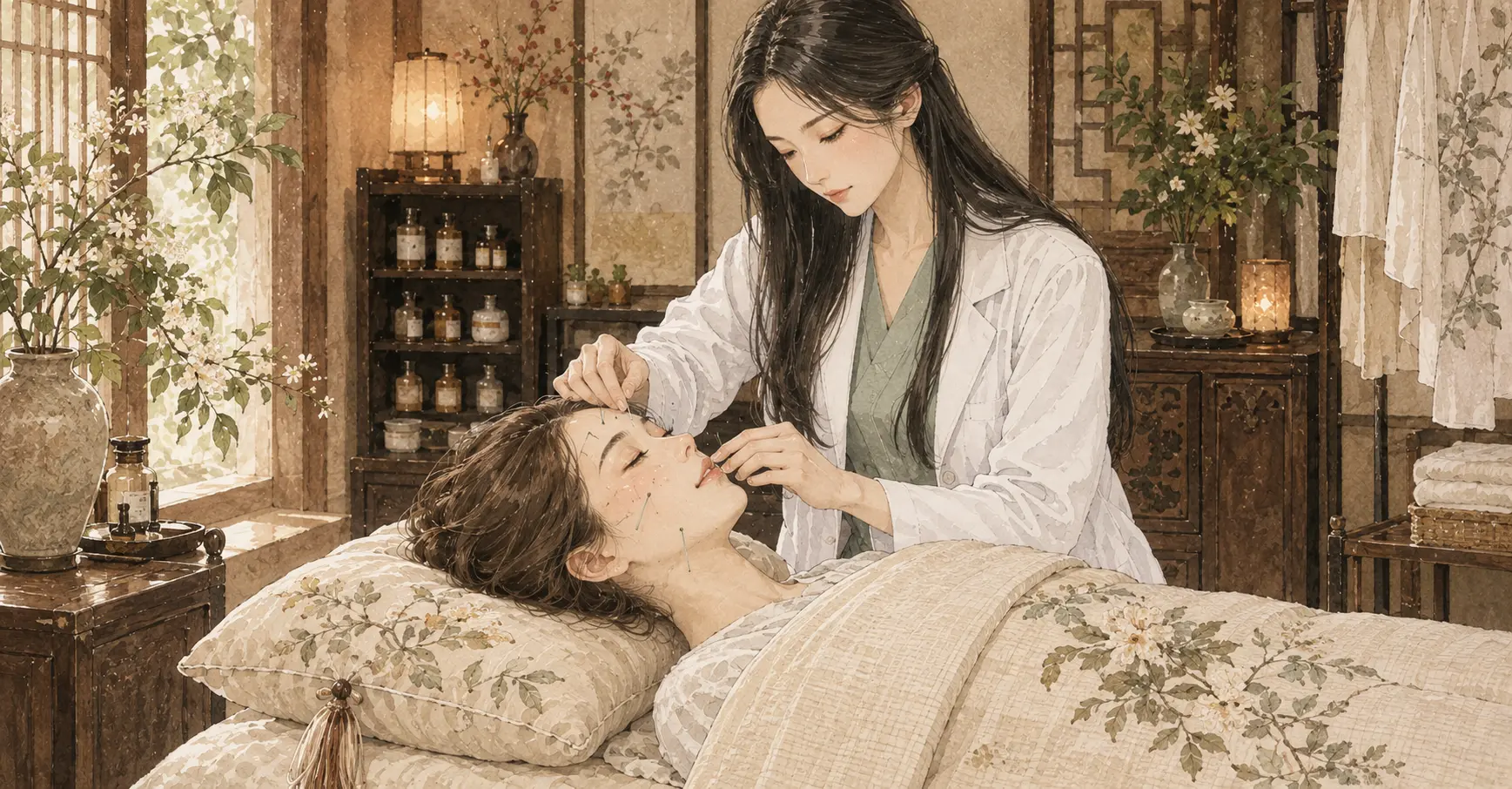
This is a translated editorial adaptation of the Japanese interview introducing the operator of this publication and its editorial direction. It is not a new interview or an independent third-party review, nor a recommendation to use a particular clinic or treatment.
Profile
Fumie Hamada is representative director of Japan Acupuncture Casting Co., Ltd. (Acu Cast), editor-in-chief of TOYO BIYORI, and director of ENBICHOJU acupuncture clinic in Koto-ku, Tokyo.
Born in Suzhou, China, she grew up in Japan from the age of four. After working in web design and advertising, she became independent in 2015, working in beauty writing, education, brand communications and product supervision. She obtained Japanese national licences in acupuncture and moxibustion in 2025 and established Acu Cast in 2026.
Japanese national licences in acupuncture and moxibustion; registered OTC medicine salesperson in Japan; private certifications in traditional Chinese medicine (国際中医師), Chinese dietary practice (国際中医薬膳師) and hair assessment (毛髪診断士). The private certifications are distinct from a medical licence.
Her theme is “Eastern wisdom and Western beauty.”
What did a decade in beauty communication teach her?
For more than ten years, Hamada has worked across beauty journalism, education, branding, public relations and product supervision. Presenting a product requires more than accurate facts: readers need language they can understand and use to make choices.
Turning explanations of ingredients and techniques into practical information became the editorial foundation of Acu Cast and TOYO BIYORI.
Why move from beauty work to acupuncture qualifications?
Training at a kampo pharmacy introduced her to a perspective that considers a person’s constitution and daily habits alongside individual concerns. As her interest grew, she felt limited by being able to offer only information and words to people describing discomfort.
She wanted to add hands-on practice to her knowledge of kampo and dietary care. While raising her children, she attended professional training and obtained her acupuncture and moxibustion licences in 2025.
She studied at the Japan school affiliated with Shanghai University of Traditional Chinese Medicine and undertook training in Shanghai. Her further study in Chinese medicine and dietary practice reflected a wish to understand the body and everyday life as a whole.
Where did she see a gap between expertise and everyday life?
Hamada describes meeting people with persistent, hard-to-explain discomfort who felt they had run out of options after visiting several medical institutions. This is her observation from the original interview, not evidence that any particular alternative will provide an answer.
Her aim is not to recommend a single method. Diagnosis and treatment should remain with appropriate medical care. Alongside that, people can understand the available forms of everyday care, who provides them and what qualifications they hold. She sees her role as reducing the barrier of not being able to choose because one does not know the options.
Making qualifications more than a title
Japanese national licences in acupuncture and moxibustion; registered OTC medicine salesperson in Japan; private certifications in traditional Chinese medicine (国際中医師), Chinese dietary practice (国際中医薬膳師) and hair assessment (毛髪診断士). The private certifications are distinct from a medical licence.
Expertise is not a reason to use more difficult language. It helps shape what to communicate, to whom and how—in corporate projects, product supervision, seminars and articles. Understanding the limits of what can responsibly be said is also part of that expertise.
What does Acu Cast do?
Founded by Hamada in 2026, Acu Cast connects businesses with acupuncture professionals. Her starting point was concern about expertise going unused: some qualified practitioners leave the field, while people unfamiliar with acupuncture have few opportunities to understand what practitioners study or how they approach the body.
The Japanese profile explains that qualifying involves at least three years of professional education covering foundations of Western and Eastern medicine, followed by the national examination. Hamada hopes that opportunities beyond the treatment room can help more people understand practitioners’ knowledge.
The company works in six areas: employee benefits and visiting acupuncture services; product supervision and joint development; presentations at launches and PR events; seminars and workshops; media appearances and article review; and wellbeing support for hotels and elder-care facilities.
Practitioners participate as independent contracted partners for individual projects. Acu Cast highlights two complementary areas of expertise—for example, a nutritionist who is also an acupuncturist, a sleep specialist who is also an acupuncturist, or an acupuncturist specialising in women’s health and beauty.
The company also helps define the audience, project, wording and delivery. It makes limits clear, including that its corporate support does not replace medical diagnosis or treatment, or the roles of occupational physicians and public health nurses.
What does she want TOYO BIYORI to offer?
Launched in September 2026 and produced by Acu Cast, TOYO BIYORI explores Asian beauty and everyday self-care. Hamada wants readers to understand what they can choose today and feel able to act. In the original interview, she describes yohjo as attention to everyday life rather than a way to cure the body.
First, the journal aims to offer a broad entrance to traditions across Asia: acupuncture, kampo, dietary practice, Ayurveda from India and Sri Lanka, traditional Thai approaches and Balinese body care, alongside travel, places and businesses.
Second, it aims to help specialists communicate in everyday language. Articles identify contributors’ qualifications, roles and the basis for their explanations.
Third, it distinguishes editorial work from paid features. Paid articles display PR and the provider near the beginning. Expert review is kept distinct from product introductions so that a professional title is not mistaken for a product endorsement.
The journal does not set Eastern traditions against Western medicine. It encourages appropriate professional care rather than asking readers to manage everything through self-care.
What kind of place should the journal become in three years?
Hamada hopes it will be a first stop when someone wants to explore Asian beauty, wellbeing, places, products or experiences—and a place where they can find something and take the next step.
Her longer-term hope is that everyday self-care will connect individual wellbeing with wellbeing across society. These are aspirations, not achieved outcomes.
Frequently asked questions
Who operates the journal? Japan Acupuncture Casting Co., Ltd. (Acu Cast); its representative director, Fumie Hamada, is editor-in-chief.
What qualifications does she hold? Japanese acupuncture and moxibustion licences, registered OTC medicine salesperson status, and the three private certifications described above.
What does Acu Cast provide? Specialist casting and project support across the six areas described in this profile, from employee benefits to media and facility programmes.
Is the journal only about acupuncture? No. It covers Asian beauty and self-care traditions, food, travel, facilities and business initiatives.
How are paid features identified? Paid articles display PR and the provider near the title. Relevant product provision and cooperation are also explained in individual articles.
References in the Japanese original
Source references checked in the original on 20 September 2026.
General beauty and wellbeing information, not diagnosis or treatment. Seek appropriate medical advice for severe, sudden or persistent symptoms, and follow your treating clinician’s instructions.