Bathing & travel · A GUIDE FOR YOUR JAPAN VISIT
Planning a slower trip in Japan—from half a day to a few nights
Choose one thing to look forward to, then leave space for the journey, meals and rest.
Written and edited by the TOYO BIYORI editorial team
Japanese publication: 2026.09.18 · English adaptation: 29 October 2026
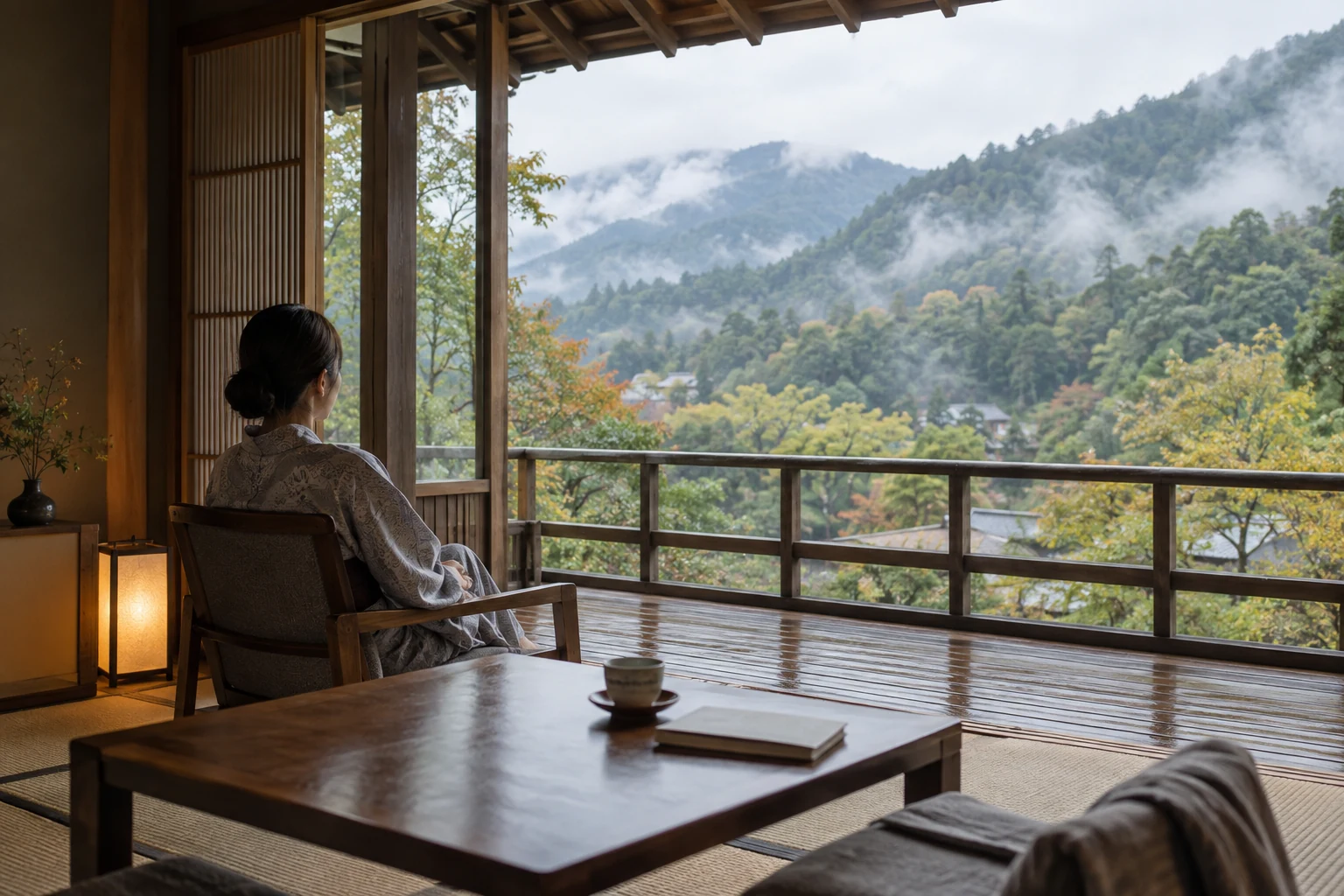
Start with the time you actually have
A half-day tea visit, one night at a hot-spring inn or a longer stay can all make room for rest. Yohjo travel, as we use the term here, means enjoying food, bathing and time for yourself; it does not require a prescribed number of nights or activities.
For half a day, combine a tea room or lunch with a nearby stop and check return transport and opening hours. For one night, make the inn’s dinner and an unhurried morning the focus. With two or more nights, leave a middle day for one experience and time off. These are editorial suggestions, not packages sold by a particular venue.
Let arrival be enough on the first day
After a long journey, a full evening of treatments and elaborate plans may leave little energy to enjoy them. Arrive with time to settle in, locate your room and facilities, and check dinner arrangements. If you are tired, rest before bathing.
Japan’s hot-spring guidance also advises resting when excessively fatigued. Bathing is a physical stimulus, not something you must immediately fit in. A pause and a drink of water can come first. Confirm meal times, allergy arrangements and distances around the property to avoid later rushing.
Choose one highlight for the next day
A morning walk, a tea experience, a seasonal meal or a spa appointment can be enough to give the day shape. Add activities according to travel time and how you feel, rather than trying to use every available service.
If you find yourself adding plans because you have travelled so far, return to the purpose of the trip. An empty afternoon can be part of what you came for.
Make departure gentle too
On the final day, stay nearby, enjoy breakfast and take a short walk if you wish. Leave some space after returning home: arrange an easy meal and avoid overloading the following morning.
You do not need to measure a trip’s success in health scores. Having eaten slowly, slept comfortably or enjoyed a quiet moment can be enough. None of these experiences is a guaranteed treatment outcome.
Seven things to check in an inn
Consider the whole route, including changes and the last leg from the station. Check how many nights fit your time and budget, and the actual check-in and check-out times.
Ask about meal times, portion adjustments, allergies and dietary requirements, including the deadline for requests. Look for a nearby path or garden if a short walk matters to you. For treatments, ask who provides them, what qualifications they hold, whether advance reservations are required, and the fees and cancellation terms.
Finally, consider quietness: the property’s size, group bookings and whether meals can be taken privately may affect the experience. Ask practical questions rather than assuming every ‘wellness’ property offers the same atmosphere.
Bathing without overdoing it
Avoid bathing immediately before or after eating and after drinking alcohol. Rest first if exhausted. Rinse gradually before entering, drink water before and after, avoid prolonged hot bathing and rest afterwards. Begin with limited bathing sessions rather than trying to fit in as many as possible.
Read the posted hot-spring precautions and restrictions. If you have a medical condition or are pregnant, ask your clinician before travelling about what is appropriate. Our onsen, sento and sauna article covers the differences and further precautions.
Treatments and food: ask before booking
For a treatment, confirm qualifications, content, price and cancellation conditions. Share relevant information about medication, pregnancy or medical conditions, and ask the practitioner about bathing and drinking alcohol afterwards. Similar-sounding menu names may describe different services.
For meals described as yakuzen, ask what ingredients are used. Enjoy the local and seasonal food without relying on promised health effects. Tell the venue about allergies in advance, and ask about smaller portions if a multi-course dinner feels too much.
What to pack—and when to change the plan
Bring comfortable shoes, a layer for cooler mornings and evenings, a water bottle, your regular medicines and an up-to-date medication list. Keep travel-insurance and relevant health information accessible. A book or notebook can be useful if you want a break from screens.
A solo or one-night trip can work well: keep transfers manageable and choose a plan that fits your needs. If you feel unwell, reduce activities. Avoid bathing with fever or significant symptoms, and seek medical help when needed. Rest is part of the trip, not a failure to complete it.
Keep exploring
Continue with Onsen, sento or sauna? Choosing a place to warm up in Japan, or explore our English guide to places in Kyoto and Tokyo.
About this article
Adapted from our Japanese editorial article for visitors to Japan, with explanations of Japanese terms and practical travel context. This is general cultural and lifestyle information, not individual medical advice or a promise of health benefits. Follow professional advice where relevant and confirm each venue’s current arrangements.
This is an editorial article without advertising or paid promotion.
The original Japanese article credits Fumie Hamada as its reviewer. Review scope and qualifications are recorded in the Japanese edition; this English adaptation has not received a separate expert review.