Culture & experiences · A GUIDE FOR YOUR JAPAN VISIT
A first encounter with Japanese incense and kodo
What it means to “listen” to fragrance, how to choose a workshop and what to know before lighting incense.
Written and edited by the TOYO BIYORI editorial team
Japanese publication: 2026.10.25 · English adaptation: 29 October 2026
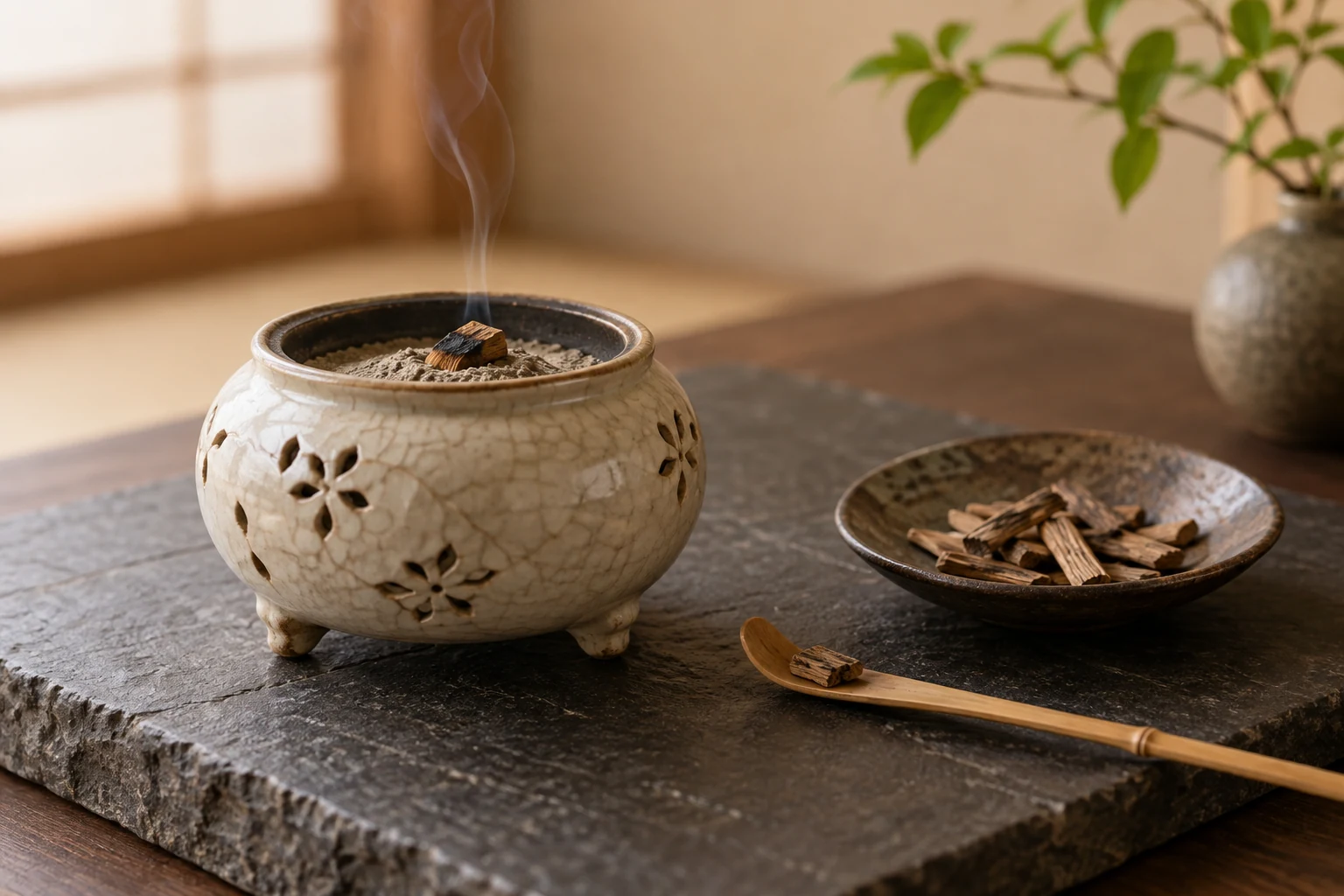
Incense comes in several forms
Sticks are lit to release smoke and fragrance. Cones spread scent over a shorter period, while coils can burn for longer. Pressed incense, known as inko, may be burned or warmed according to the product and practice. Fragrant woods such as agarwood and sandalwood can be gently heated for monko, or incense appreciation.
These forms invite different ways of enjoying scent. A room fragrance, a temple offering and a formal incense gathering are not necessarily interchangeable experiences.
What is kodo?
Kodo is a Japanese traditional art centred on appreciating fragrant wood. The expression is to ‘listen’ to incense rather than simply smell it. Its forms developed over centuries, with different schools preserving their own procedures and tools.
One practice, kumiko, involves comparing fragrances in a setting that may draw on poetry or stories. The experience is about attending to subtle differences and the cultural setting, not merely getting the right answer.
Choose a welcoming first session
Look for a workshop that explains its procedures from the beginning. Ask which school or approach it follows, how long it takes, the fee and group size. Many introductory sessions last roughly one to two hours, but check the specific booking.
Ask whether floor seating is required and whether a chair is possible. Avoid strong perfume, scented hand cream or anything that could interfere with the fragrance. Rare fragrant woods can be valuable; follow the host’s instructions when handling them. Visitors who need English guidance should confirm this before reserving.
Enjoy incense safely at home
Use a suitable holder on a stable, heat-resistant surface, well away from paper, curtains and other flammable materials. Ventilate the room. Never leave burning incense unattended, and check that it is fully extinguished.
Keep it away from children and pets. If smoke causes coughing, discomfort or nausea, stop and air the room. A pleasant scent is something to enjoy; it is not a promise of relaxation or a health effect.
Questions before you begin
Is temple incense different from incense for a room? Shapes may overlap, but smoke levels and fragrances vary. Choose according to the intended use and instructions.
Do you need to commit to lessons? No. An introductory session can be enough. If you enjoy it, ask about classes within the school. You can decide afterwards whether you want to continue.
Our Japanese directory includes cultural experiences and incense-related shops. The English guide is a smaller selection; it does not yet include every category.
Keep exploring
Continue with Shakyo and shabutsu: a respectful first visit to a Japanese temple workshop, or explore our English guide to places in Kyoto and Tokyo.
About this article
Adapted from our Japanese editorial article for visitors to Japan, with explanations of Japanese terms and practical travel context. This is general cultural and lifestyle information, not individual medical advice or a promise of health benefits. Follow professional advice where relevant and confirm each venue’s current arrangements.
This is an editorial article without advertising or paid promotion.