Culture & experiences · A GUIDE FOR YOUR JAPAN VISIT
Shakyo and shabutsu: a respectful first visit to a Japanese temple workshop
An introduction to copying sutras and tracing Buddhist images, with practical questions to ask before joining.
Written and edited by the TOYO BIYORI editorial team
Japanese publication: 2026.10.24 · English adaptation: 29 October 2026
What are shakyo and shabutsu?
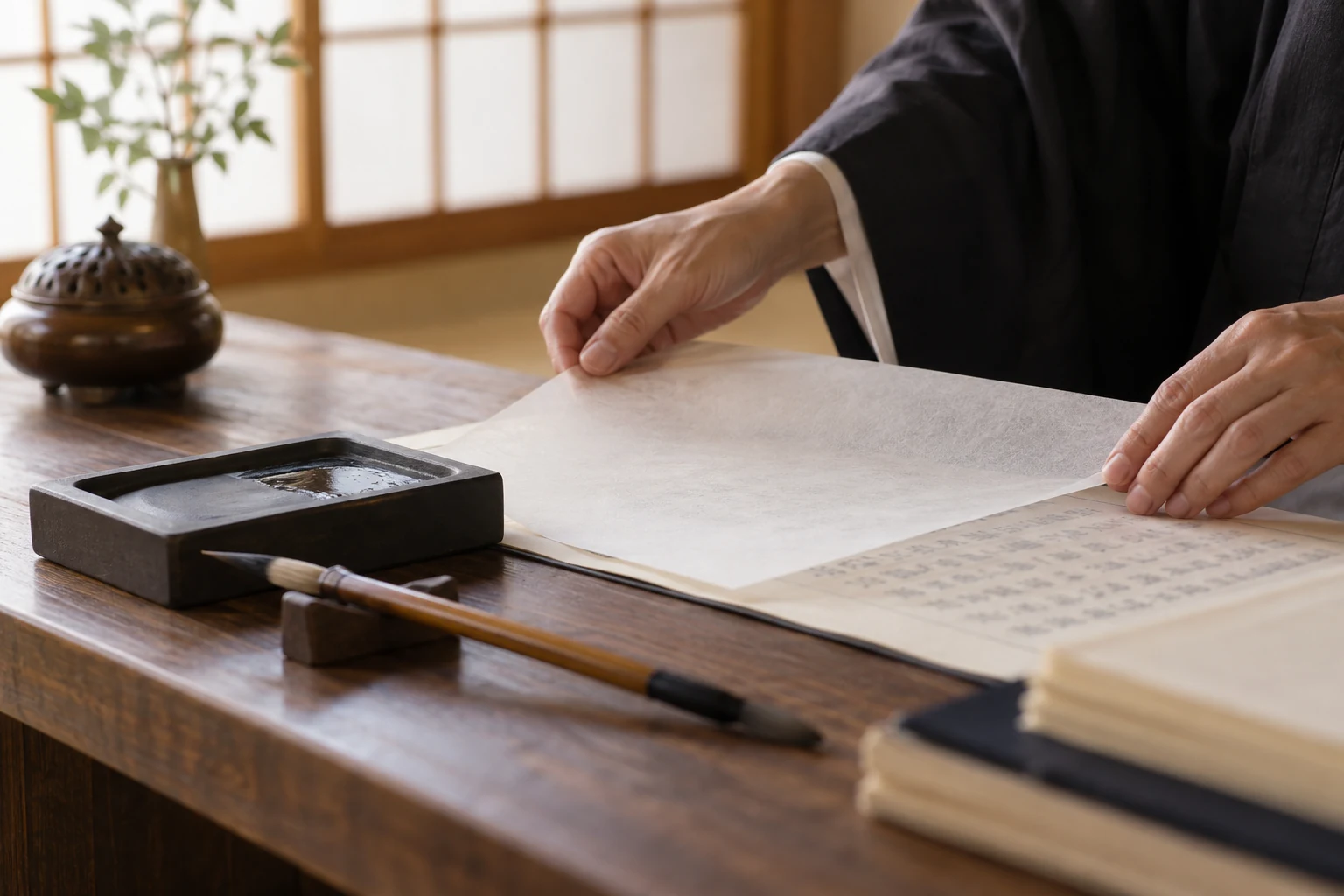
Shakyo means copying a Buddhist sutra character by character. Before printing, copying helped transmit the scriptures; writing them also became a Buddhist practice in its own right.
Public sessions often use the Heart Sutra, a text of a little over 200 characters. At many temples, participants place paper over an example and trace it with a brush or brush pen. You do not need confident calligraphy to start. Shabutsu follows a similar approach, tracing an image of the Buddha rather than a text.
What happens at a session?
Procedures differ between temples. You will usually check in, pay a participation or offering fee and receive an explanation of the tools and etiquette. The opening may include cleansing the hands, joining the palms or chanting, according to that temple’s practice.
You then copy at your own pace, often for around an hour. Some temples invite participants to add a wish, date and name. The finished work is commonly offered to the temple. People finish at different times, so avoid treating it as a race.
Ask these questions before booking
Is a reservation required, or are walk-ins accepted? What is the fee, and are tools provided? Do you need to bring a brush pen? How much time should you allow, and may you leave partway through?
Ask about clothing, floor seating and chairs if kneeling is difficult. Check whether the session offers shakyo, shabutsu or both. If you cannot read Japanese, ask whether tracing instructions and introductory guidance are available in a language you understand. Do not assume every session provides English support.
Etiquette inside the temple
Arrive with time to spare, keep conversation quiet and silence your phone. Ask before taking photographs inside the hall or posting them on social media. If you make a mistake, follow the temple’s instructions for correcting it.
A temple is a place of religious practice as well as a place you may visit. Respect its traditions and the people who worship there. Follow the host’s guidance rather than expecting every temple to use the same rules.
Appreciate the practice on its own terms
Some people find quiet copying calming, but shakyo did not originate as a health treatment. Rather than expecting a particular effect, pay attention to the act of making one character or line at a time.
Many introductory sessions welcome beginners, including people who are not Buddhist, but participation conditions differ. Ask the temple directly. This article is not an invitation to join a particular religious group.
Can you continue at home?
Templates and copying paper are sold for home use. A temple session can help you learn the procedures first. Work completed at a temple is generally offered there; if you copy at home and would like to offer it to a temple, ask whether it accepts such offerings.
For another way to approach temple culture, read our introduction to shojin ryori, the Buddhist food tradition.
Keep exploring
Continue with Shojin ryori: meeting Japan’s Buddhist food tradition, or explore our English guide to places in Kyoto and Tokyo.
About this article
Adapted from our Japanese editorial article for visitors to Japan, with explanations of Japanese terms and practical travel context. This is general cultural and lifestyle information, not individual medical advice or a promise of health benefits. Follow professional advice where relevant and confirm each venue’s current arrangements.
This is an editorial article without advertising or paid promotion.