Food & tea · A GUIDE FOR YOUR JAPAN VISIT
Shojin ryori: meeting Japan’s Buddhist food tradition
Beyond a meal without meat or fish: ingredients, seasonality and the care given to preparing and eating.
Written and edited by the TOYO BIYORI editorial team
Japanese publication: 2026.10.24 · English adaptation: 29 October 2026
What is shojin ryori?
Shojin ryori is cooking rooted in Buddhist teachings, traditionally prepared without meat or fish. It has been passed down as part of temple practice, particularly associated with Zen traditions in Japan.
Some temples also avoid strongly scented vegetables such as garlic, leeks, chives and scallions. Stock may be made from kombu seaweed and dried shiitake instead of bonito. Details vary between traditions and kitchens.
Care for ingredients and the meal
Gratitude for ingredients, avoiding waste, thoughtful preparation and an appreciation of the seasons are central themes. Vegetable stems and peelings may be used rather than discarded, and careful preparation brings out simple flavours.
In Zen settings, both cooking and eating can be understood as practice. This background is part of the experience; shojin ryori is more than a checklist of excluded ingredients.
Try one soup and one dish at home
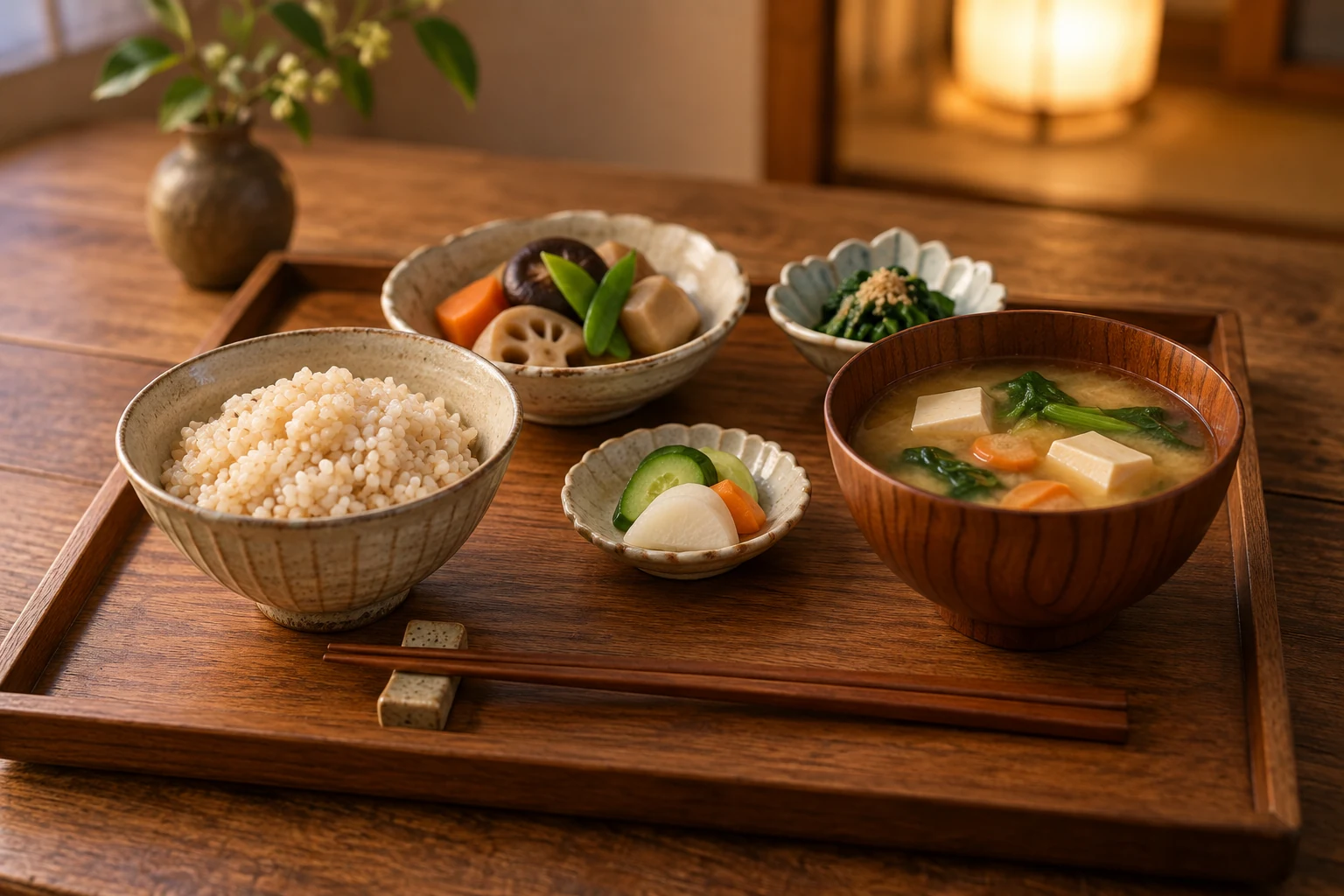
For a simple introduction, prepare rice, a soup and one vegetable dish—an approach called ichiju issai. It is an everyday starting point inspired by the tradition, not a claim to reproduce a formal temple meal.
For example, serve plain or mixed-grain rice with miso soup made from kombu and dried-shiitake stock, seasonal vegetables and tofu. Add simmered root vegetables, greens dressed with sesame or grilled aubergine. Trying this occasionally can offer a different rhythm at the table.
Think about the whole diet
A meal is not automatically nutritionally balanced because it is called shojin ryori. When eating without meat or fish regularly, include varied protein sources such as tofu, natto, beans and other soy foods, and consider the balance of your overall diet.
If you intend a long-term dietary change or have particular nutritional needs, ask a registered dietitian or appropriate clinician. Follow any medical dietary advice you have been given.
Eating at a temple or specialist restaurant
Some temples, temple lodgings and specialist restaurants serve shojin ryori. Reservations are often needed. Ask about times, fees, dress and any mealtime procedures before visiting.
If you are vegan or have allergies, describe your requirements explicitly and confirm ingredients, stock and preparation. The Buddhist background and a venue’s practices are not identical to every visitor’s definition of vegan food; the name alone should not replace an ingredient check.
A few common questions
Is it the same as vegan cooking? There is overlap in avoiding animal ingredients, but the religious background and additional rules can differ. Ask each kitchen what it serves.
Is it necessarily healthier? Consider the meal and your diet as a whole, rather than assuming a health benefit from the label. What is shojin-otoshi? It refers to a meal marking the end of a period of dietary observance, often connected with memorial customs; meanings vary by region and household.
For another temple experience, explore shakyo and shabutsu, or begin with our guide to reading Japanese fermented-food labels.
Keep exploring
Continue with Shakyo and shabutsu: a respectful first visit to a Japanese temple workshop, or explore our English guide to places in Kyoto and Tokyo.
About this article
Adapted from our Japanese editorial article for visitors to Japan, with explanations of Japanese terms and practical travel context. This is general cultural and lifestyle information, not individual medical advice or a promise of health benefits. Follow professional advice where relevant and confirm each venue’s current arrangements.
This is an editorial article without advertising or paid promotion.