Food & tea · A GUIDE FOR YOUR JAPAN VISIT
Miso, amazake and nukazuke: reading Japanese fermented-food labels
A practical guide to ingredients, alcohol, salt and storage when exploring Japanese food.
Written and edited by the TOYO BIYORI editorial team
Japanese publication: 2026.10.21 · English adaptation: 29 October 2026
Four things to check
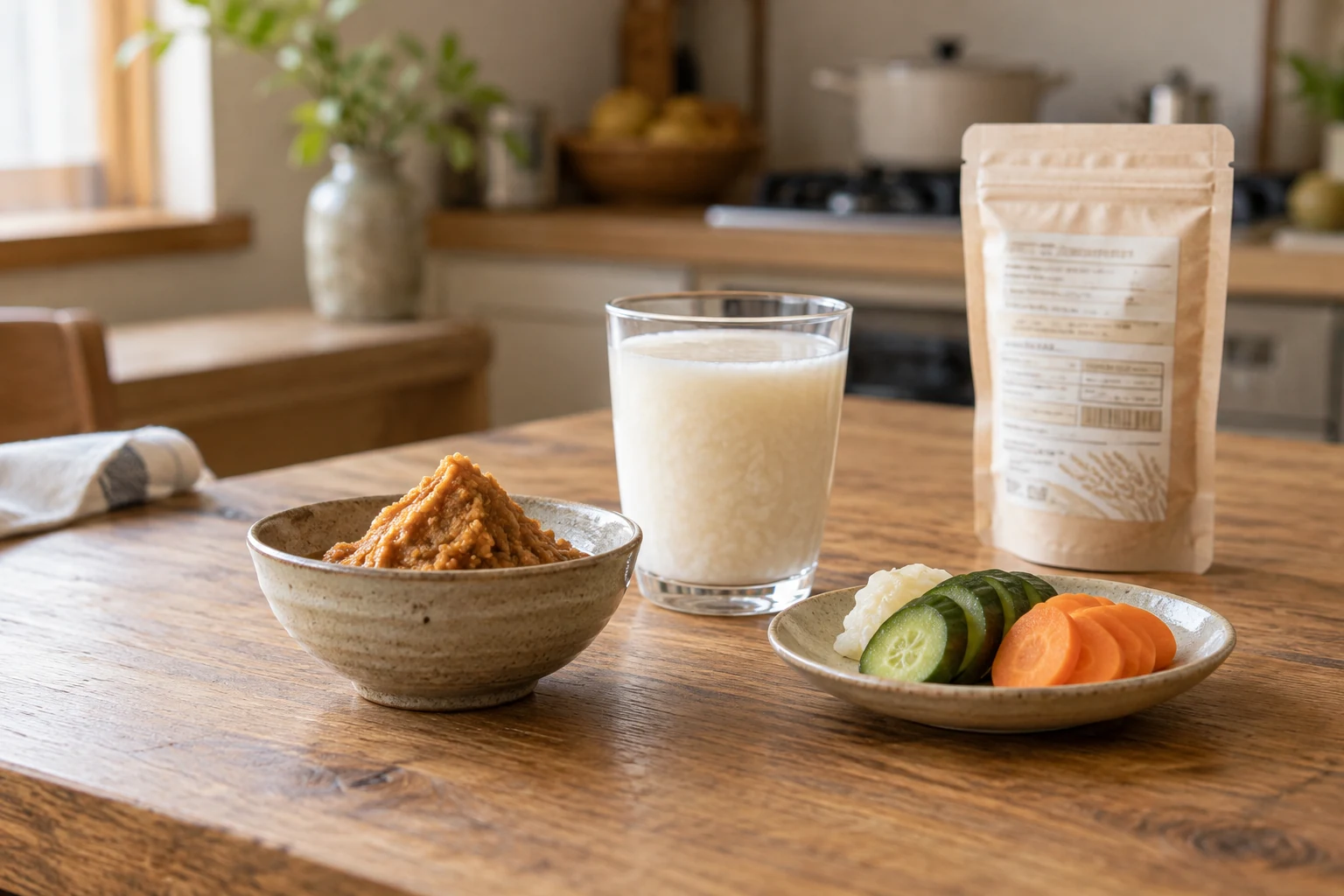
Fermented foods are familiar parts of Japanese cooking. When buying them, look at the ingredients, alcohol information, salt content and storage instructions. Check the manufacturer or seller’s contact details if anything is unclear.
Useful terms include 原材料名 (ingredients), 食塩相当量 (salt equivalent), 保存方法 (storage instructions) and 要冷蔵 (keep refrigerated). Nutrition information may be per serving or per 100 g, so compare like with like. If you cannot read a label, ask for help rather than guessing about allergens or alcohol.
Miso: more than soybeans and salt
Miso commonly contains soybeans, rice or barley, and salt. Dashi-added versions can contain bonito extract or other seasonings. If you avoid fish, check the stock ingredients as well as the word ‘miso’.
酒精, or shusei, means alcohol added to help maintain product quality by controlling fermentation. Check for this if alcohol matters to your dietary requirements. Miso can contribute considerable salt; adjust the amount you use and consider a soup with more ingredients and less broth.
A 生 label may indicate that the miso has not been heat-treated. Follow the product’s storage instructions, including refrigeration, rather than treating ‘raw’ as a reason to ignore them.
Two different kinds of amazake
Rice-koji amazake is made from rice and rice koji. Sake-lees amazake is made using sake kasu, the residue from sake production, and may contain alcohol. Look for 米こうじ or 米麹 (rice koji) and 酒かす or 酒粕 (sake lees), then confirm the actual product’s alcohol statement.
Avoid alcohol-containing sake-lees amazake for children, during pregnancy or breastfeeding, before driving, or if you need to avoid alcohol. A product’s name alone is not enough. Even alcohol-free rice-koji amazake can be high in sugars, so enjoy it as a food or drink rather than assuming unlimited amounts are beneficial.
Nukazuke: pickles and their storage
Nukazuke are vegetables pickled in a rice-bran bed. Check the ingredients and salt information. Some products imitate the style using a seasoning liquid, so the name does not tell you everything about preparation.
Follow refrigeration instructions and use opened products promptly according to the label. With homemade miso or a pickling bed, use clean utensils and hands, learn from a reliable method and do not eat anything with suspicious mould or an unusual smell.
Read health language carefully
Fermented foods are foods, not medicines. A broad claim such as ‘boosts immunity’ should not be read as a guarantee. Japan has specific systems for certain authorised or notified health-related food claims; check the actual product category and wording rather than inferring benefits from ‘fermented’ alone.
If you need to manage blood glucose, salt or another part of your diet, follow your clinician’s advice. There is no single amount of amazake or miso appropriate for everyone.
Eating and shopping while travelling
Ask about stock, soy, wheat or barley, alcohol and other ingredients relevant to you. A restaurant dish and a packaged food need separate checks. If you plan to take food home, check your destination’s import rules and whether you can maintain the required storage temperature.
For another perspective on Japanese food, read about shojin ryori. Our yakuzen restaurant guide also explains how to ask about unfamiliar ingredients without treating a meal as medical care.
Keep exploring
Continue with Shojin ryori: meeting Japan’s Buddhist food tradition, or explore our English guide to places in Kyoto and Tokyo.
About this article
Adapted from our Japanese editorial article for visitors to Japan, with explanations of Japanese terms and practical travel context. This is general cultural and lifestyle information, not individual medical advice or a promise of health benefits. Follow professional advice where relevant and confirm each venue’s current arrangements.
This is an editorial article without advertising or paid promotion.
The original Japanese article credits Fumie Hamada as its reviewer. Review scope and qualifications are recorded in the Japanese edition; this English adaptation has not received a separate expert review.