Food & tea · A GUIDE FOR YOUR JAPAN VISIT
Choosing a yakuzen restaurant or cafe in Japan
Let ingredients, clear explanations and a meal you enjoy guide your choice.
Written and edited by the TOYO BIYORI editorial team
Japanese publication: 2026.10.17 · English adaptation: 29 October 2026
What does yakuzen mean?
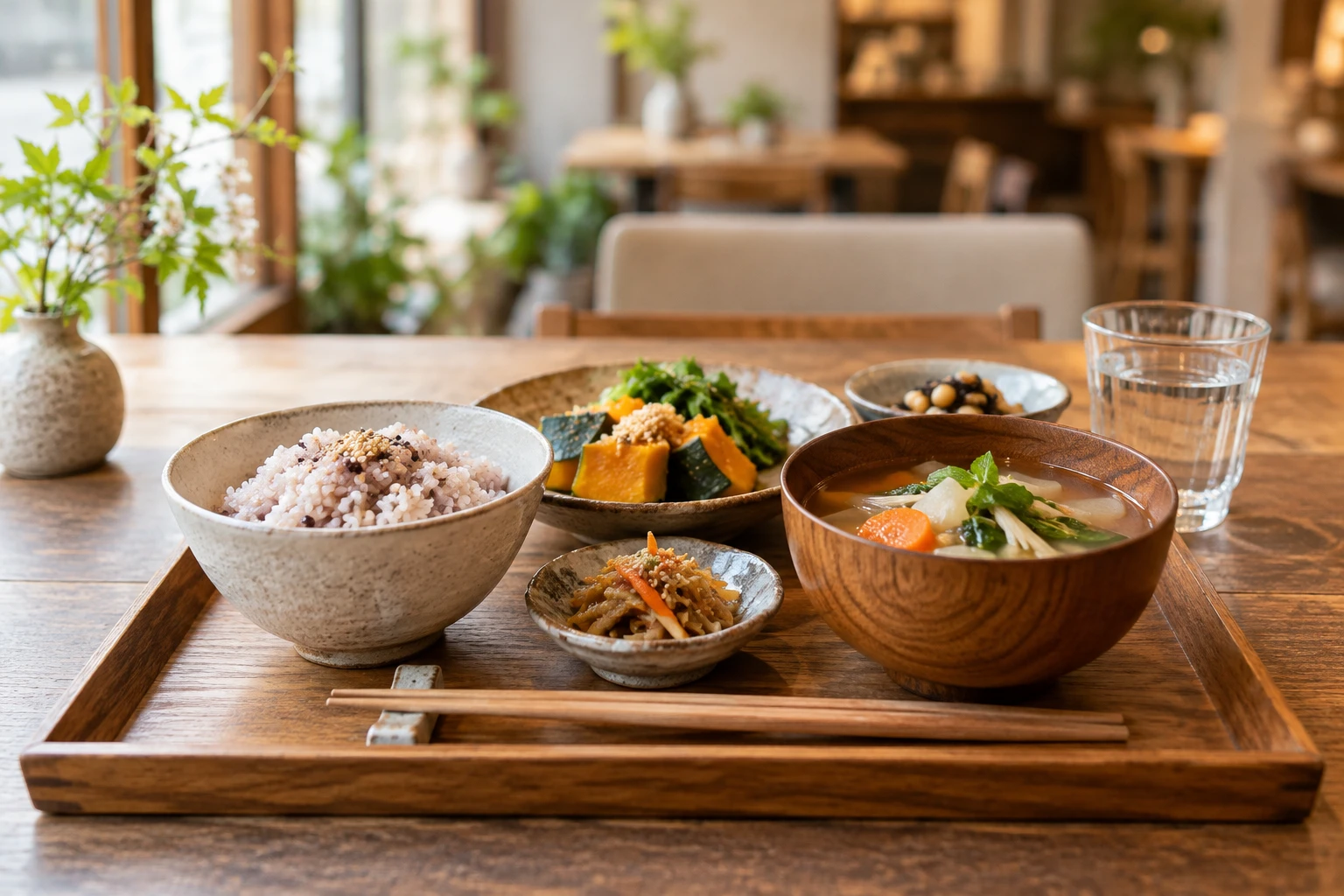
Yakuzen is an approach to food informed by traditional Chinese dietary ideas, choosing and combining ingredients with attention to the season and the individual. It is not limited to rare herbs: ordinary ingredients can also be part of it.
In Japan, the word does not describe one standardised menu. A dish with jujubes or goji berries, a botanical soup and a seasonal set meal may all be presented as yakuzen. Read the specific description rather than assuming the label guarantees a particular recipe or effect.
Questions that make choosing easier
Can the restaurant explain what is in the dish and why the ingredients were combined? Can it check allergens, including nuts, buckwheat, dairy and unfamiliar botanical ingredients? Ask about anything you do not recognise.
Look at portion size, price and the actual food offered. Find out who developed the menu and what they studied if that interests you. A thoughtful explanation is more helpful than a mysterious ingredient list or an impressive-sounding label alone.
A menu is not a prescription
Treat claims that a dish cures an illness or changes your constitution with caution. Food descriptions that explain taste, seasonality and ingredients give you a clearer basis for choosing than promised medical effects.
A restaurant may ask about your preferences or use a traditional constitution questionnaire to suggest a meal. That is not a medical diagnosis and should not be used to decide whether you have an illness or need treatment.
What do qualifications tell you?
Yakuzen-related qualifications reflect different courses and organisations, with varying lengths and content. They are not the same as a Japanese medical licence. A qualification can tell you something about a person’s training, but does not by itself establish that one restaurant is better than another.
Ask where and how the person studied, and listen to how they explain the food. You do not need to master the theory to enjoy a meal.
Allergies, medication and pregnancy
Many yakuzen dishes are ordinary meals, but some use botanical ingredients you may not usually eat. If you take medication, have a dietary restriction or are pregnant, check the ingredients and ask your doctor or pharmacist about anything uncertain. Tell the restaurant your requirements before you arrive.
Do not assume a traditional ingredient is safe for every person. If a restaurant cannot confirm ingredients or meet an allergy requirement, choose another dish or venue.
The most useful test: would you enjoy returning?
Does the food taste good to you? Is the portion comfortable, the explanation clear and the price appropriate? A seasonal meal you enjoy is a more useful everyday choice than something you force yourself to eat for a promised effect.
For a starting point in Kyoto, our English listing for Kyoto Ogawa Shoyaku CAFE describes its tea, sweets and soup curry. Use the venue’s current menu and booking information when planning a visit. The fermented-food guide offers more help with reading unfamiliar ingredients.
Keep exploring
Continue with Miso, amazake and nukazuke: reading Japanese fermented-food labels, or explore our English guide to places in Kyoto and Tokyo.
About this article
Adapted from our Japanese editorial article for visitors to Japan, with explanations of Japanese terms and practical travel context. This is general cultural and lifestyle information, not individual medical advice or a promise of health benefits. Follow professional advice where relevant and confirm each venue’s current arrangements.
This is an editorial article without advertising or paid promotion.
The original Japanese article credits Fumie Hamada as its reviewer. Review scope and qualifications are recorded in the Japanese edition; this English adaptation has not received a separate expert review.