Food & tea · A GUIDE FOR YOUR JAPAN VISIT
A quiet cup with a kyusu: brewing Japanese tea without fuss
You can keep your weekday tea bags. Make a little room for loose-leaf tea when you have time.
Written and edited by the TOYO BIYORI editorial team
Japanese publication: 2026.10.18 · English adaptation: 29 October 2026
Once a week is enough
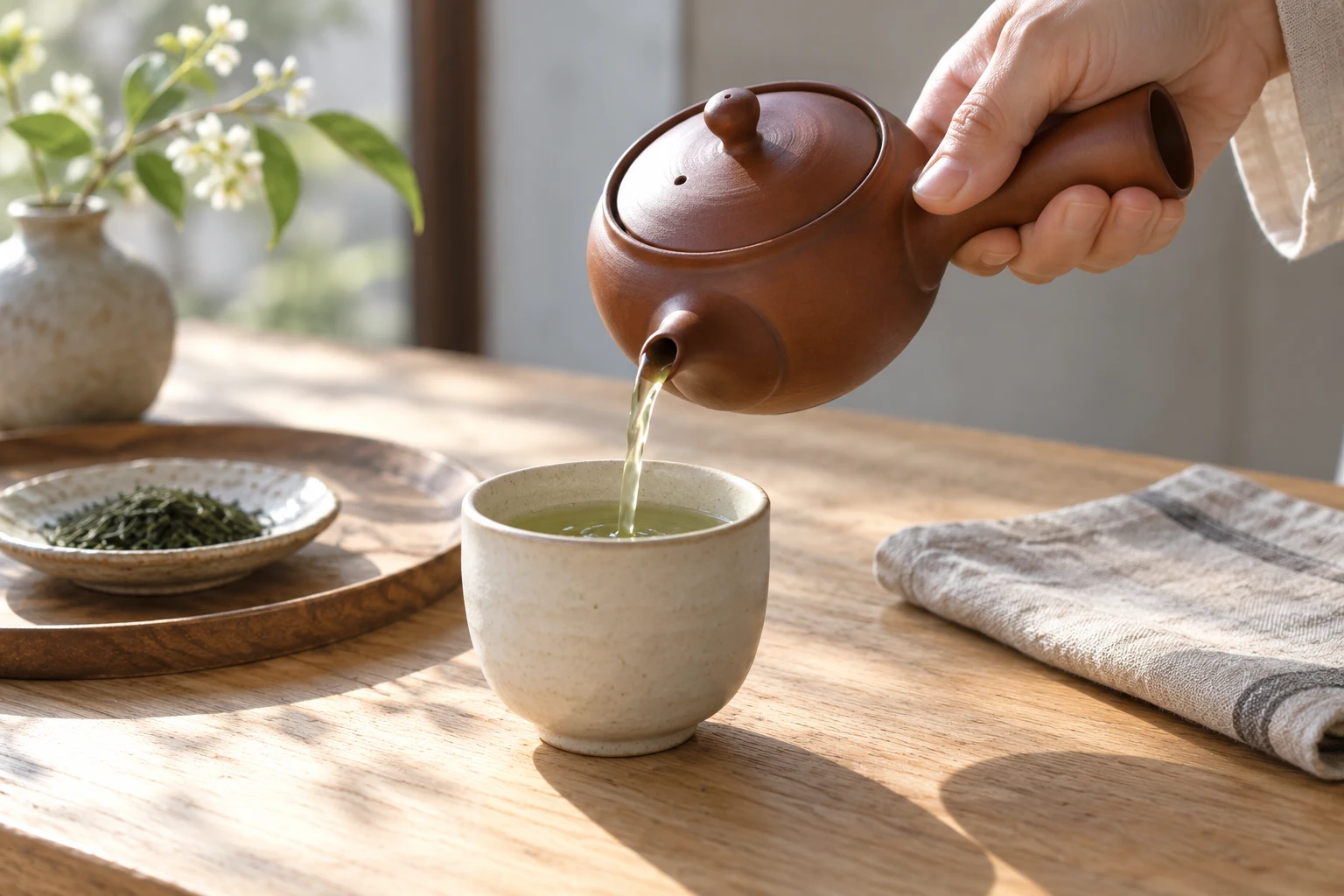
A daily tea ritual can sound lovely and still be difficult to maintain. Tea bags or bottled tea may suit busy weekdays. On an unhurried afternoon, try boiling water, adding leaves to a pot and pouring a small cup.
There is no need to make it a duty. Treat it as an occasional pleasure. A tea you discover during a visit to Japan can become a small reminder of the trip when you get home.
What you need
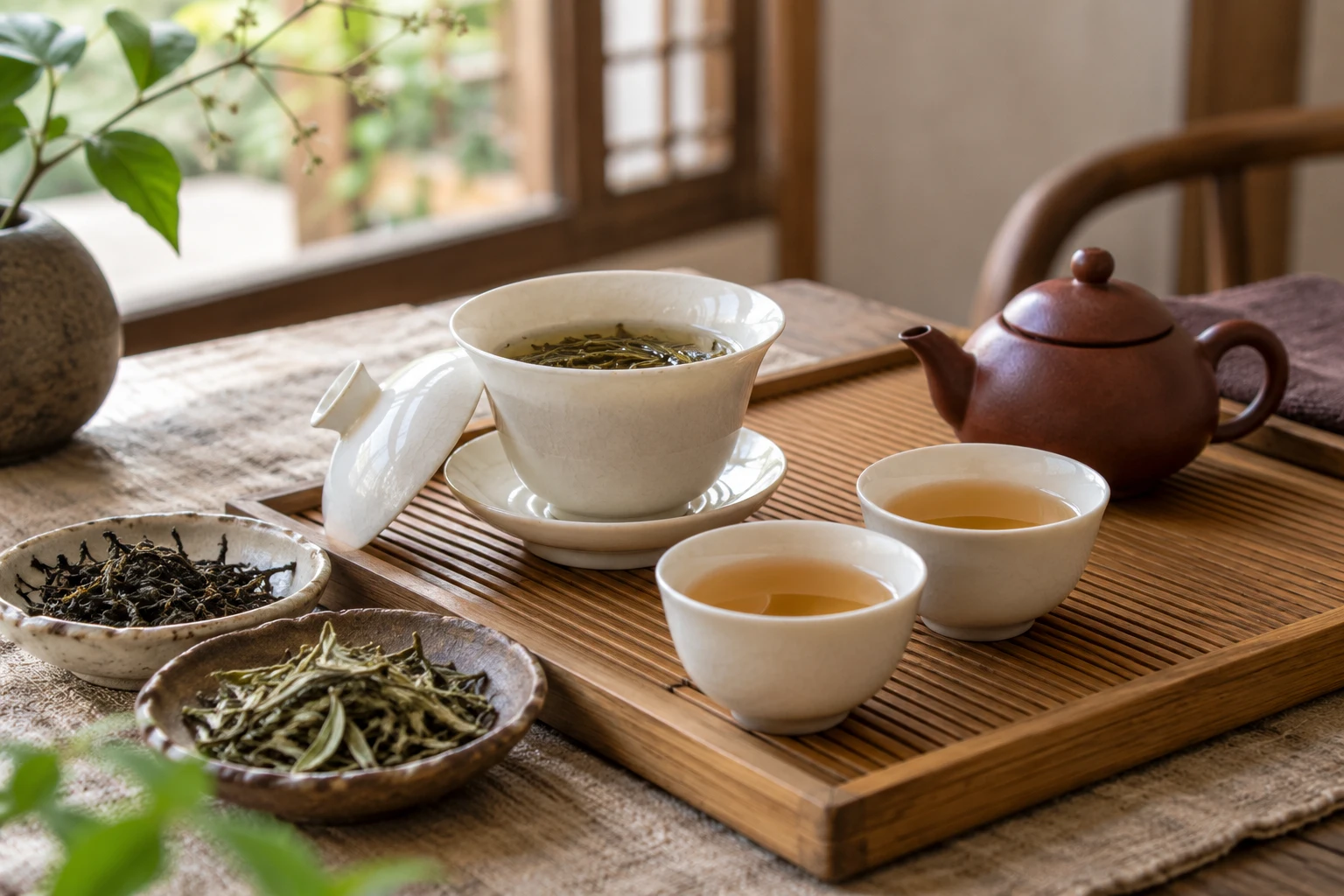
Start with a small teapot or kyusu, a cup, loose-leaf tea and freshly boiled water. For one or two people, a pot of around 200–300 ml is a practical size. Small cups make it easy to pour a little at a time.
Choose one tea you enjoy, such as sencha, hojicha or oolong, and buy a small amount first. A scale and thermometer are optional. A teaspoon gives you a starting point; adjust to the tea’s package instructions and your taste. A mug with an infuser also works if you do not own a kyusu.
A simple approach to sencha
Slightly cooled water generally brings out a gentler sweetness in sencha than freshly boiling water. One easy method is to pour boiled water into your cup first, then transfer it to the pot containing the leaves.
Allow roughly a minute for the first infusion as a starting point, then pour out the liquid completely. Leaving the leaves sitting in water makes the next cup harder to control. Follow the packet where it gives specific amounts, temperatures and times.
Roasted hojicha and many oolongs can be brewed with hotter water. Different teas reward different approaches, so ask the shop for advice rather than applying one rule to every leaf.
Keep afternoon caffeine in mind
Sencha, hojicha and oolong contain caffeine. Small cups can make the amount easier to keep track of, and you can alternate tea with water. If caffeine affects your sleep, reduce it later in the day or choose a clearly labelled caffeine-free drink.
Barley tea and plain black-soybean tea can be alternatives, but check the ingredients of blends and any relevant allergies. Enjoying more infusions still adds to the total amount you drink.
Buying and keeping leaves
Ask the tea shop how to brew your chosen leaves and how many infusions to expect. After opening, store tea airtight, away from light and moisture, and follow its label. Buying small amounts helps preserve the aroma; the Japanese article suggests using opened tea within roughly one to two months as a practical guide.
Sencha often gives a second infusion, and many oolongs offer several. The changing flavour is part of the pleasure. Tea is not a treatment, and this article does not promise health effects from a particular variety.
Bring the experience into your trip
A tea cafe is a useful place to try something before buying it. Our English guide includes Kyoto Ogawa Shoyaku CAFE and Yamcha Garden, with practical booking notes. For a broader vocabulary, read our introduction to the six Chinese tea categories.
Keep exploring
Continue with Six Chinese tea categories—and how to enjoy a tea house in Japan, or explore our English guide to places in Kyoto and Tokyo.
About this article
Adapted from our Japanese editorial article for visitors to Japan, with explanations of Japanese terms and practical travel context. This is general cultural and lifestyle information, not individual medical advice or a promise of health benefits. Follow professional advice where relevant and confirm each venue’s current arrangements.
This is an editorial article without advertising or paid promotion.